EPIC, Theology, 4 Philosophy: 8/2/17
4.0 The Epiccissians do not have a religion as the term is commonly understood in pre-Singularity times. There is no concept of an interactive God who requires worship or who can be appealed to for some type of assistance, adjustment or correction to the natural order. If the term God is used it refers to mathematics. For the Epiccissians mathematics speaks the absolute truths of the Universe and God. Mathematics is both God and the Universe. Mathematics provide the immutable laws of the Universe, the environment and of the Epiccissian place and role in the grand structure.The primary objective of the Epiccissians is to live life as completely as possible and to make of themselves everything that they can possibly be.
4.0.1 The philosophy of the Epiccissians traces its roots all the way back to the early Greeks and Epicurus. The following is a summary from Religion Facts:
4.1 Epicureanism Overview
4.1.1 Epicureanism is an ancient Greek philosophical system taught by Epicurus. It emphasized the goal of a happy and content life in the here and now, rejecting both superstitious fear of the gods and notions of an afterlife.
4.1.2 Though the modern use of the term “Epicurean” is associated with the saying, “Eat, drink and be merry,” Epicureanism did not advocate simple pursuit of bodily pleasure and differed significantly from hedonism.
4.2 History
4.2.1 The life of Epicurus is better known than any of his contemporaries and he is more of a “personality” than any other ancient philosopher with the exception of Socrates. He 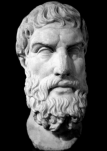 was born in 341 BC in the Athenian colony of Samos. In 307 or 306 BC he settled in Athens, where he bought a house with a garden. Here he gathered a group of disciples and taught what became known as the “philosophy of the Garden.”
4.2.2 Epicurus and his disciples formed a close-knit community, living a life of austere contentment in seclusion on his property. He admitted both women and slaves to his community, which, along with his seclusion and “atheism,” probably led to the rumors and criticisms that circulated about his school. Epicurus was a father-figure to his students and wrote letters of instruction to the Epicurean communities he had formed.
4.2.3 Epicurus died in 270 BC. His followers celebrated his birthday and gave him honors as to a god. No later figure of importance arose in his school, and unlike the changes common to other philosophical schools, Epicureanism was characterized by a conservative tendency in preserving the founder’s teachings.
4.2.4 Epicureanism was highly influential in the Hellenistic Age. The Epicureans and the Stoics were the chief rivals for the allegiance of educated people of this period. Both had a continuing influence, but Stoicism, with its active involvement in public life (the philosophy of the Porch instead of the Garden), ultimately appealed to more individuals and had more influence.
4.3 Texts
4.3.1 Epicurus is said to have written about 300 scrolls, but little of this survives. His teachings are preserved in three letters and a collection of 40 maxims called the “Principal Doctrines” (Kyriae doxai). The works of Philodemus, a 1st-century BC Epicurean, discovered at Herculaneum, and a large 2nd-century inscription in Lycia, have further added to our knowledge of Epicurus and his teaching.
4.4 Beliefs
4.4.1 Epicurus taught a materialistic view of the universe: the whole of nature consists of matter and space. All matter is divisible down to the level of atoms (Greek for “indivisible”). They are eternal, neither created nor destroyed. They cannot be seen or felt with the senses but they do have size, shape, weight and motion. The atoms operate according to natural law. Thus there is no creation and no purpose in nature.
4.4.2 Epicurus also rejected believe in an afterlife. The soul is also made of atoms, though of a subtler sort than the body. Body and soul must be joined to give life; when the body dies, the soul also disintegrates. Therefore, there is no need to fear either death or future punishment.
4.4.3 Epicurus did believe in the gods. The visions of gods in dreams and the universal opinion of humanity proved their existence. But he regarded them as made of atoms like everything else (immortal because their bodies do not dissolve) and living in a happy, detached society out of contact with humans. Thus there is no place for providence, prayer or fear of the gods. Epicurus saw religion as a source of fear; banishing religion made peace of mind possible. He could be said to have had “a theology without a religion.”
4.4.4 The Epicurean purpose of life is peace of mind, happiness and pleasure. But the Epicurean pursuit of pleasure was neither hedonism nor self-indulgence. Epicurus primarily promoted the pleasures of the mind, friendship and contentment. Epicurus noted that it is human nature to seek pleasure and avoid pain, and made this the basis of his guidelines for living.
4.4.5 We must exercise ourselves in the things which bring happiness, since, if that be present, we have everything, and, if that be absent, all our actions are directed towards attaining it. (Epicurus, Letter to Menoeceus) He encouraged seeking after the the highest quality of pleasure, which is rarely the immediate gratifications of hedonism. Epicurus evaluated pleasure and pain by three main criteria:
intensity – strength of the feeling
duration – length of the feeling
purity – i.e., pleasure unaccompanied by pain
4.4.6 Therefore for Epicurus, “there was no reason to eat, drink and be merry today if you are going to have a headache from it tomorrow.” Overindulging in food or drink would not score highly on either duration or purity of pleasure. Pleasures that begin with pain are also inferior: eating is a pleasure but it starts with the pain of hunger; sex is a pleasure but it starts with the pain of desire. These pleasures are not as “pure” as those characterized entirely by the absence of pain, such as rest, good health, and the companionship of friends.
4.4.7 Just as pleasure was not to be blindly sought after, so not all pain should be avoided. Sometimes endurance of pain brings greater pleasure so that it is worth it. Moreover, since pleasure and pain are measured quantitatively, pain can be endured in the knowledge that more pleasure has been experienced. Thus Epicurus, who suffered from poor health throughout his life, could say on his death bed:
4.4.8 A happy day is this on which I write to you… The pains which I feel… could not be greater. But all of this is opposed by the happiness which the soul experiences, remembering our conversations of a bygone time. The highest good in Epicureanism is ataraxia, a tranquility derived by the absence of agitation. And the highest positive pleasure of Epicurus was a society of good friends. It shelters the fearful and gives the pleasure of companionship. He thus replaced the loss of the gods and civic life with the bond that exists among friends.
4.5 Practices: To achieve the best pleasure and prevent pain, Epicurus counseled his disciples to live a quiet, secretive life apart from society, avoiding responsibilities in public life (like holding office) or social life (like getting married). This avoids the pain of ambition and fear caused by others.
4.5.1 Interestingly, despite his rejection of the gods as having any bearing on human life, Epicurus encouraged his followers to worship the gods. This is partly for the sake of conformity, but also because the gods are perfect beings who deserve worship and honor. Moreover, people receive aesthetic pleasure from contemplating their perfect existence.
4.6 Epictetus: Four hundred years after Epicurus a crippled slave named Epictetus extended the work of Epicurus. The following is from the Wikipedia section on Epictetus.
4.6.1 “Epictetus maintains that the foundation of all philosophy is self-knowledge, that is, the conviction of our ignorance and gullibility ought to be the first subject of our study. Logic provides a valid reasoning and certainty in judgement, but it is sub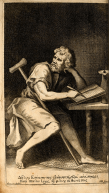 ordinate to practical needs. The first and most necessary part of philosophy concerns the application of doctrine, for example, that people should not lie. While the third, lastly examines and establishes the reasons. This is the logical part, which finds reasons, shows what is a reason, and that a given reason is a correct one. This last part is necessary, but only on account of the second, which is rendered necessary by the first.
4.6.2 Both the Discourses and the Enchiridion begin by distinguishing between those things in our power (prohairetic things) and those things not in our power (aprohairetic things).[31]
4.6.3 That alone is in our power, which is our own work; and in this class are our opinions, impulses, desires, and aversions. What, on the contrary, is not in our power, are our bodies, possessions, glory, and power. Any delusion on this point leads to the greatest errors, misfortunes, and troubles, and to the slavery of the soul.[32]
4.6.4 We have no power over external things, and the good that ought to be the object of our earnest pursuit, is to be found only within ourselves.[33]
4.6.5 The determination between what is good and what is not good is made by the capacity for choice (prohairesis).[34] Prohairesis allows us to act, and gives us the kind of freedom that only rational animals have.[35] It is determined by our reason, which of all our faculties, sees and tests itself and everything else.[36] It is the correct use of the impressions (phantasia) that bombard the mind that is in our power:[37]
4.6.6 Practice then from the start to say to every harsh impression, “You are an impression, and not at all the thing you appear to be.” Then examine it and test it by these rules you have, and firstly, and chiefly, by this: whether the impression has to do with the things that are up to us, or those that are not; and if it has to do with the things that are not up to us, be ready to reply, “It is nothing to me.”[38]
4.6.7 We will not be troubled at any loss, but will say to ourselves on such an occasion: “I have lost nothing that belongs to me; it was not something of mine that was torn from me, but something that was not in my power has left me.” Nothing beyond the use of our opinion is properly ours. Every possession rests on opinion. What is to cry and to weep? An opinion. What is misfortune, or a quarrel, or a complaint? All these things are opinions; opinions founded on the delusion that what is not subject to our own choice can be either good or evil, which it cannot.[33] By rejecting these opinions, and seeking good and evil in the power of choice alone, we may confidently achieve peace of mind in every condition of life.[39]
4.6.8 Reason alone is good, the irrational is evil, and the irrational is intolerable to the rational.[40] The good person should labour chiefly on their own reason; to perfect this is in our power.[41] To repel evil opinions by the good is the noble contest in which humans should engage; it is not an easy task, but it promises true freedom, peace of mind (ataraxia), and a divine command over the emotions (apatheia).[42] We should especially be on our guard against the opinion of pleasure because of its apparent sweetness and charms.[43] The first object of philosophy, therefore, is to purify the mind.[44]
4.6.9 Epictetus teaches that the preconceptions (prolepsis) of good and evil are common to all.[45]Good alone is profitable and to be desired, and evil is hurtful and to be avoided.[46] Different opinions arise only from the application of these preconceptions to particular cases, and it is then that the darkness of ignorance, which blindly maintains the correctness of its own opinion, must be dispelled.[45] People entertain different and conflicting opinions of good, and in their judgment of a particular good, people frequently contradict themselves.[47] Philosophy should provide a standard for good and evil.[48] This process is greatly facilitated because the mind and the works of the mind are alone in our power, whereas all external things that aid life are beyond our control.[48]
4.6.10 The essence of divinity is goodness; we have all good that could be given to us.[49] The deities too gave us the soul and reason, which is not measured by breadth or depth, but by knowledge and sentiments, and by which we attain to greatness, and may equal even with the deities. We should, therefore, cultivate the mind with special care.[50] If we wish for nothing, but what God wills, we shall be truly free, and all will come to pass with us according to our desire; and we shall be as little subject to restraint as Zeus himself.[51]
4.6.11 Every individual is connected with the rest of the world, and the universe is fashioned for universal harmony.[50] Wise people, therefore, will pursue, not merely their own will, but also will be subject to the rightful order of the world.[52] We should conduct ourselves through life fulfilling all our duties as children, siblings, parents, and citizens.[53]
4.6.12 For our country or friends we ought to be ready to undergo or perform the greatest difficulties.[54]The good person, if able to foresee the future, would peacefully and contentedly help to bring about their own sickness, maiming, and even death, knowing that this is the correct order of the universe.[55] We have all a certain part to play in the world, and we have done enough when we have performed what our nature allows.[56] In the exercise of our powers, we may become aware of the destiny we are intended to fulfill.[57]
4.6.13 We are like travelers at an inn, or guests at a stranger’s table; whatever is offered we take with thankfulness, and sometimes, when the turn comes, we may refuse; in the former case we are a worthy guest of the deities, and in the latter we appear as a sharer in their power.[58] Anyone who finds life intolerable is free to quit it, but we should not abandon our appointed role without sufficient reason.[59] The Stoic sage will never find life intolerable and will complain of no one, neither deity nor human.[60] Those who go wrong we should pardon and treat with compassion, since it is from ignorance that they err, being as it were, blind.[61]
4.6.14 It is only our opinions and principles that can render us unhappy, and it is only the ignorant person who finds fault with another.[62] Every desire degrades us, and renders us slaves of what we desire.[62] We ought not to forget the transitory character of all external advantages, even in the midst of our enjoyment of them; but always to bear in mind that they are not our own, and that therefore, they do not properly belong to us. Thus prepared, we shall never be carried away by opinions.”
4.7 Renaissance: Epicurean societies flourished in the late Hellenistic era and during the Roman era. By the end of the Roman Empire Epicureanism had all but died out and would be resurrected in the 17th century by the atomist Pierre Gassendi.” Link
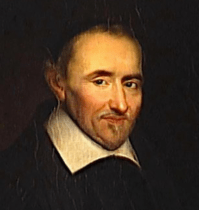
3.7.1 Pierre Gassendi was a French philosopher, priest, astronomer and mathematician… “Gassendi was one of the first thinkers to formulate the modern “scientific outlook”, of moderated skepticism and empiricism.” Gassendi published the first data on the transit of Mercury across the Sun in 3.6.2 The lunar crater Gassendi is named for him”…”He wrote numerous philosophical works that explored ways between skepticism and dogmatism.”…”Though Descartes is often credited with the discovery of the mind-body problem, Gassendi, reacting to Descartes’ mind-body dualism, was the first to state it.” Link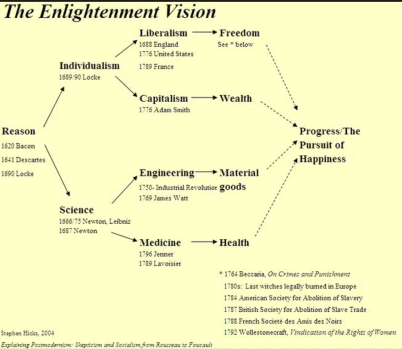
4.7.2 The concept of the Renaissance Man or polymath popularized in the 20th century of a gifted person who seeks to develop their abilities in all areas of accomplishment: intellectual, artistic, social and physical perfectly describes the Epiccissian philosophy.
4.8 The Age of Aquarius: Up until the Singularity all of human history has been a story of struggle for existence. If it was not a struggle for basic food and health, it was a struggle between races, tribes and religion for wealth, power and dominance. At the moment of the Singularity all of these issues came to an end for those who were Epiccissians. The Epiccissians as a single pure race quietly migrated to the sanctuary of their communities which possessed unlimited electrical power and unlimited robotic labor support. Epiccissians with property, transferred their property rights to the nearest Epiccissian community. Otherwise, as they entered the community they left behind all of their personal wealth. This was the elegance of the Epiccissian movement. From the perspective of those outside of the community the Epiccissians had nothing of value to be taken. The Epiccissian communities became like cloistered monasteries, isolated from the local surroundings and of neither bother nor value to anyone outside.
4.8.1 The Epiccissians own nothing that is personal and are provided everything that is needed. Each day fresh clothes are waiting for them when they awake. The place where they choose to sleep may be the same or different and has fresh bedding every night. All of their meals are provided in the dining areas. In terms of food, shelter, security, health, education and community the Epiccissian lacks for nothing and all of their personal value is encompassed within their value as a human being, which is beyond measure. And since the value of a human being came to have almost no value in the pre-Singularity time, the Epiccissians possess nothing that the outside world wants and so in the post-Singularity times they were ignored and left in peace.
4.8.2 With no sense of personal possessions or concern for a lack of physical and emotional needs, traits such as envy and jealousy do not exist. In the Epiccissian community there is no crime, hate or fear but rather only joy, love, respect and support for each community member. The battle between good and evil that persisted since the beginning of self aware hominoids has ended with good the victor within the Epiccissian community.
4.8.3 In the traditional world the battle between good and evil continued until well into the 22nd century until the traditional population became nearly extinct through deaths by war, famine and disease. By the end of the 22nd century the world population had declined from nearly 9 Billion at the time of the Singularity, in the mid 21st century, to a little over 1 Billion which were the Epiccissians. Another hundred million remained in primitive tribes and communities that rejected all technology. The Singularity is recognized as the dawn of the Age of Aquarius.
 The land of epic